

 Management Consulting
 Software Engineering
 Product & Strategy
 AI
AI Security
 Cloud
Cloud Data
Data Talent


Taking Responsibility for Your Transformation

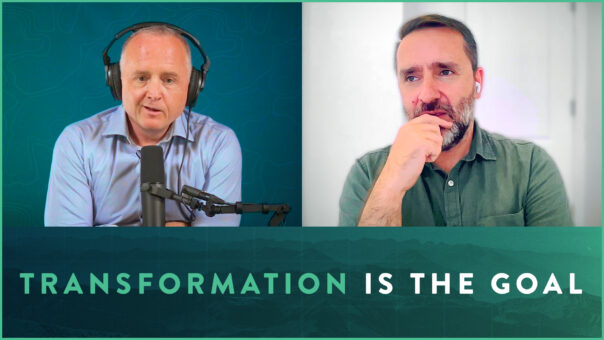
You can’t just form teams, let them self-organize, and hope they go off and solve all your problems. You have to have a POV and a plan for how you’re going to achieve business agility.
Video Transcript
Taking responsibility for the outcomes that we’re promising. Basically committing to our organizations that we not only have a point of view, but we have a plan for how to get there, I think is the next frontier of this conversation. I don’t think that that is a conversation that most folks are having. I think they’re basically saying, teach people agile. A miracle happens, and then we get this business benefit on the backside, and I think a lot of what we’re talking about is how are we more explicit in step two?
So it’s not just, yes, we need to form teams, but it’s asking yourself, how are we going to form teams and what are we going to form them around and actually having an answer, not I’m going to tell the team they need to do Scrum and let them go figure it out, and then just hope that they solve it.
As change agents is leaders within our organizations, we have to have a point of view on what is the right organizational metaphor for figuring out how to form teams. If we’re going to have networks of teams, what does that structure look like? What’s the hierarchy of it? How does the flow of value all come together? If we’re going to do governance and we’re going to say, okay, we need to work with smaller batches of the portfolio and we need to decompose portfolio items into smaller items at the program level, and then we need to feed those smaller items into business capability focused teams, we actually need to go and think through and define how that is going to happen. How are we going to enable the predictable, steady throughput at the business capability, focused team level? How is that going to very specifically enable options at the strategy level to make sure that the business can achieve its goals?
We need to have an answer to that question. What are we going to measure along the way from a business value perspective? On one hand, a financial perspective, but also what are we going to measure so that we’re accountable to the rest of the organization so that we can basically say, we called our shot, we put the eight ball in the corner pocket, we said we were going to do this, we did it. Here’s the business benefit that you got from it.