


 Management Consulting
 Software Engineering
 Product & Strategy
 AI
AI Security
 Cloud
Cloud Data
Data Talent


Internal and External: Do We Treat Customers the Same?

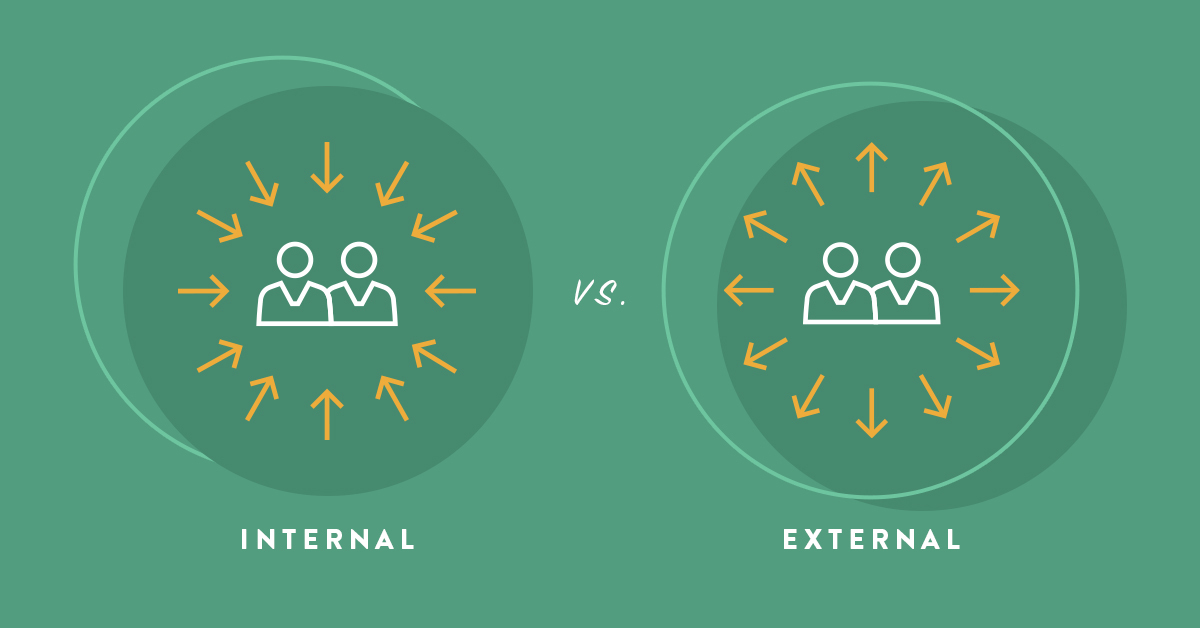


I have noticed during my time working with various product teams that there is a tendency to treat internal customers as fundamentally different than external customers. When our customers are internal to our organization it can actually be a great boon for product management: it removes a layer of abstraction between customer problems and the team responsible for solving them; there are increased opportunities for obtaining iterative customer feedback at any given point in the pre-production phase of the product lifecycle; there is likely to be convergence in our need to measure the success of our product and the needs of our customers to measure the impact of our product(s) on their operations. In a nutshell, it’s a lot easier to cultivate empathy for people you can walk up and talk to about their pain over lunch.
It is, however, a double-edged sword. The same proximity to our source of demand that drives a more natural harmonization between product teams and customers can end up paving the way to bad habits. I believe most of these bad habits are rooted in a tendency to perceive internal customers as having more power or ownership over the products being built than external customers do – and frequently this feeling of customer hegemony is bidirectional, with internal customers feeling a sense of authority over the product backlog, even when not in a PO-type role. In-and-of-itself that is not necessarily a bad thing, but when those customers do not exert that authority with care, thoughtfulness, and intentionality, they can subvert the efforts of the teams when it comes to delivering quality product on a predictable cadence in a way that maximizes value.
In my experience, this problem can manifest in a direct or indirect fashion. In a direct fashion, customers end up with a straight line into the delivery team, circumventing the appropriate governance structures. Indirectly, product teams can lose focus on discovery activities and end up more readily accepting proposed solutions, rather than doing the appropriate due diligence into the customer problem. There can be a resistance to questioning the wisdom of an internal customer when it comes to how they think their problem should be solved; that effect can be further exacerbated when those customers are perceived to sit higher up in the corporate hierarchy. Regardless of whether the effect is direct or indirect, the impact ends up being the same: delivery teams experience more thrashing and pivots, reprioritizations are not vetted against value frameworks as well, and we end up with a set of conditions that makes it difficult to be sure we are building the right thing.
While there certainly are some real differences in the mechanics, and politics, of how we interact with internal versus external customers, at the end of the day it is critical that we (as product professionals) maintain our focus on the outcomes we are looking to achieve – and those should not be divergent regardless of whether our customers are part of, or external to, our organization.