

 Management Consulting
 Software Engineering
 Product & Strategy
 AI
AI Security
 Cloud
Cloud Data
Data Talent


A Working AI Pilot Proves Nothing


A working AI pilot proves less than most executives assume. This episode digs into why AI initiatives clear a demo and then stall in production, and the constraint is rarely the model. It’s whether the organization’s data, applications, and ownership structure are actually ready to run on it. That readiness gap shows up two ways: AI use turning into the next shadow IT, and teams mistaking individual productivity wins for organizational proof. The conversation also breaks down a framework for sorting what AI can already do inside a business from what it can’t do yet, and why context, not model quality, is becoming the real differentiator.
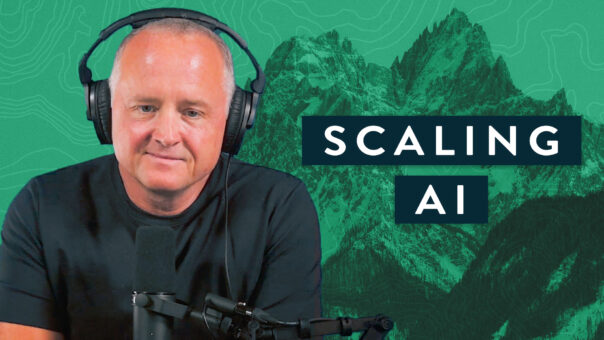
Host Stacy Gordon talks with LiminalArc CEO Mike Cottmeyer in the relaunch episode of Future State Now, formerly SoundNotes, tracing the company’s shift from LeadingAgile to LiminalArc and what AI transformation means as the next chapter of enterprise change.
Video Transcript
Mike Cottmeyer:
This is where I think we’re starting to see the pattern of stuff Gartner writes about, about the percentage of AI pilots that are going to fail, pilots that are not getting the ROI, token spend out of control, again, not getting the value out of it that these organizations expect. And I think that’s an artifact of trying to exploit AI capabilities on top of a organization, application, and data infrastructure that just isn’t ready for it.
Stacy Gordon:
Hi, everyone. Thanks for being here. I’m Stacy Gordon, the host of our inaugural new podcast called Future State Now. You may remember it as sound notes previously, but we’ve rebranded and renamed our podcast and are excited to be back in your feed. My guest today is founder and CEO of Liminal Arc, Mike Kotmeier. We’ve got a number of topics to talk about, specifically the new name of the company, Liminal Arc, and a number of other things. So we’re going to get right into it. Thanks again for being here. Hey Mike, it’s been a hot minute. So glad to have you back in the seat. How are you?
Mike Cottmeyer:
I’m doing good. I’m happy to be here. Glad we finally got this on the calendar so we could have a chat. I
Stacy Gordon:
Know. So tell me what’s been going on really.
Mike Cottmeyer:
Gosh, it’s almost like what hasn’t been going on? Yeah. I mean, anybody who’s in the consulting industry knows the consulting industry’s been a ride for the last couple years. Yeah. So aside from trying to continue to scale and grow our business and serve our clients, the journey over the last, gosh, probably since 2021, 2022, maybe a little bit earlier than that, kind of the big news that you might see some evidence up on the website about or on blog posts and things, but we built a studios practice. We really converted the company from a pure play agile transformation company into more of a full service consultancy. So probably our tech staff’s probably 60% of the company at this point. Most of our engagements are some mix of organizational transformation, some agile stuff, some technology modernization, refactoring. And so me leading the company, it’s like marketing and branding and websites and working with our talent group and working with our infrastructure to figure out how to build out and support. And then given my unique perspectives, I get a lot of reps helping with methodology and providing clarity and onboarding and such like that. So yeah, just a ton, growing and scaling a company, trying to integrate technology and rebuild all our systems and processes. And yeah, it’s been a busy couple years.
Stacy Gordon:
Well, I mean, you teed it up for me. So there’s a name change about a year ago. Tell me about that.
Mike Cottmeyer:
Yeah. Well, yeah, it was fascinating. So just a little bit of history. So Leading Agile, the brand had been out in market as a company, I guess, for, this is our 16th year. Gosh, I think we literally just had our 16th anniversary, August 1st. I can’t believe I just kind of missed that, just kind of blew right through that one. So it’s been busy. Yeah. And so when I first started it, the history before the company started is that Leading Agile started off as my blog. I was working for a company here in Atlanta in the financial services industry. And a guy I was working for at the time basically put on my performance criteria for the year he wanted me to start writing. He though I had some good ideas and he though I should start a blog. So I named the blog Leading Agile. And then that lasted for a couple years through my time with VersionOne here in Atlanta.
And then when I started the company, I had the website, I had followers, I had social media presence, and it just didn’t make a whole lot of sense to think about trying to create a different name. And so I just went with what I had. And so the company became Leading Agile by default. And I remember thinking in those early days, because most things, they have a life in the marketplace. I don’t want to say Agile’s a fad. It wasn’t a fad. It’s not a fad. It’s still around and it’s still doing its thing. But like anything, whether you go back to Six Sigma or critical chain project management or rationally unified process, everything has its moment in the sun. And so I remember thinking like, “Yeah, I just named my company with this word Agile in it. How much legs does it have?” And so every year in the first couple years, I was always like, “Oh, when are we going to have to change the name? When are we going to have to change the name?” And it ran about another 12 years is what it came down to. And I think part of that was because we had a fairly differentiated perspective in the market. We weren’t trying to sell training, although we did training. We didn’t really go to market as a scrum certification company. And we weren’t really an agile coaching company per se. We weren’t really a software engineering shop. We were really this enterprise transformation company.
And so I think it lasted and we had a lot of success as it started to downturn. But I had this kind of interesting life event that I haven’t really talked about publicly and I’ve kind of wanted to. It’s almost like I feel like it requires an explanation a little bit. Back in 2019, my wife got diagnosed with leukemia and that was a ride for a little while. And on the backside of that, I took a bit of time off to take care of her. She’s doing really well, by the way, totally recovered. It’s a pretty awesome story. But coming back from that, I started getting really hands-on with the company again and I start looking at our sales pipeline and I start looking at our account concentration. I start looking at our website traffic and I’m just like, “Oh, something changed.” It’s fascinating. And so yeah, it kind of took my eye off the ball and the game moved a little bit while I was away. And so from that place, I’m like, “Oh, this is fascinating.” So you start to figure out, okay, what are we going to do? How are we going to keep this thing going? And so we kind of wrestled with that. I guess it was 2026, so it was about a year ago since we changed the name.
So it would’ve been 2025. This probably started happening around 2022 as I started contemplating a name change. And we noodled around on that for a long time. The name Leading Agile meant a lot to me. I toyed with the idea of getting it tattooed on my leg. I still might at some point. So I don’t have any leading Agile tattoos, thankfully. I think it’s kind of like getting your girlfriend’s name tattooed on your arm and breaking up with her or something. So I’ve been thinking about name change for a long time and we tried to crowdsource it in the company and like, oh man, just nothing resonated with me. Nothing resonated with me. And so yeah, I just kind of woke up one night and we had been exploring this idea of liminality as a company and transformation and change and getting people to think differently about stuff.
I read Dave Gray’s book, Liminal Thinking and just literally just woke up one night with the name in my head and then noodled on it for about a month and got kind of attached to it. Started searching for domain names and things like that and just got kind of attached to it. And probably the thing that really locked it in for me is that a lot of people call our company LA, and so it preserved the LA. I though that was kind of neat. I sat down with marketing and we talked about what would we do from a branding perspective? And if you notice we kept the same branding footprint, the same basic blaze logo that we have, just trying to change it to an arc instead of a little peak. I though that was kind of cute. So I think that was the thing that finally settled it is I was like, okay, this is cool. I kind of like the name. I kind of like the transition. It was meaningful to me. And so yeah, we just cut the cord and just went with it.
Stacy Gordon: Well, I think when you talk about the idea of liminality, I do want to explore that a little bit with you
Mike Cottmeyer: Because you
Stacy Gordon: Love to create content, but you went quiet for a year. What caused you to take a beat?
Mike Cottmeyer: Well, let me explain. Yeah, you mentioned an interesting point that I want to come back to. The idea of liminality. A lot of times that’s a funny thing about the name is most people don’t know what the word means.
Stacy Gordon: Okay?
Mike Cottmeyer: Well,
Stacy Gordon: I have to be honest, I didn’t
Mike Cottmeyer: Know. Yeah. And so I think I was hesitant to use that name until we started talking about the Dave Gray book, Liminal Thinking. I’m like, oh, okay. Somebody else knows what the word means in our industry. And it had kind of a really neat context to it. And so liminal to me, it means a lot of things to a lot of people, but it’s all in the same space. It’s all about in between spaces. It’s all about going from one place to another, having to let go of one thing to get to a different thing. And the story about my wife’s leukemia introduced, imagine a lot of change into our lives and it kind of changed me as a human. And so going through that phase and then COVID right behind that and some of the changes that were going on in our company, I really started thinking about this idea of liminality. It came up in spiritual spaces and it came up in psychological spaces. And then Dave introduced it and it’s like, oh, it came up in a business space. So the name started having a lot of depth for me and I like things that mean things.
So leading Agile meant something to me. The word liminal started meaning something to me. And so it was very personal for me, this idea of liminality and the journey from one place to another. And then I started thinking about that name and the context of the journey that we were going through as we’re moving from a pure play agile transformation company into more of a full service business process re-engineering technology transformation change management company. And so I started thinking about our company being in a liminal space.
And even the last year since I announced the name change has been a bit of a liminal space for us and kind of what we’re maybe getting ready to talk about. And then the idea of Arc, how can you map the journey through the liminal space? Because one of the things we’ve talked about for years is the idea of creating safety for change. And if you’re going to go from where you are today into where you need to get to in the future, you need to be able to do that in an incremental and iterative way. You need to be able to do that with some sort of plan. It’s hard to ask somebody to let go of what they’re doing today if they don’t have a clear path to how to get to the next place.
And so that’s where the arc side of it came in. And so again, it just started accumulating and accumulating and accumulating more meaning as we went deeper into the naming. And so what was your question? So you asked me when I went quiet for a year? You went quiet. Yeah.
Stacy Gordon:
Yeah. I mean, do you feel like after the last year since you named the company that you know something different today that you didn’t know a year ago?
Mike Cottmeyer:
Yeah, great question. So for me, it’s a bit of a personal journey, right? So I grew up, I think it’s super ironic given what I do, that I actually went to school for computer science. So I have a computer science basis 30 years ago, so not much is relevant, but a shocking amount actually still is. And so I spent the first 10 years of my career doing IT infrastructure stuff, and then I spent really the second 10 years doing project program management first in the IT infrastructure space and then more so in B2B, B2C businesses and then moved into financial services and then moved into the consulting stuff that I did with Version One and then ultimately into Leading Agile. But the point was is that I’d really grown up and what LeadingAgile did, I grew up in that space and what Leading Agile did was really a manifestation of my point of view that had been developed over the previous 20, 25 years. And so as we started bringing in more technology stuff, my challenges, this is again, a personal story for me.
My challenges is that I’ve been around this stuff forever, but I’m not a hands-on guy doing the technology stuff. I’ve been a hands-on guy doing the other stuff. And so if I’m going to get on stage or I’m going to write an article, one of the things that I would say is I was kind of like an inch wide and a mile deep on some of these things. And so I just didn’t feel like I could defend a thesis. I couldn’t defend my point of view. And so a little bit of a journey over the last year is, we’re getting ready to flip our website over again, but I think our website as it stands of this recording is we do a lot of things. What makes I think us unique is that we’re very much a first principles company and those first principles can be applied into a lot of different areas. And so we get involved in cloud migration stuff and we get involved in ERP integration stuff and we get involved in security and we get involved in application builds. We get involved in a lot of things depending upon what our clients need from us.
And I think our website over last year was an attempt to talk about the breadth of what we could do. But the problem is that what you want to talk about is first principles because first principles apply everywhere all the time, no matter what you’re doing. But then you apply those first principles into six or seven different things and you’re like, “Well, it doesn’t really sound like you’re an expert in anything.” And I was dancing on this line between do I go back and start explaining first principles? Do I try to explain what we do in ARP or what we do in security or what we do in data or what we do in enterprise transformation? And after a year of doing that, I’m just like, “Ah, not landing.” It wasn’t landing the way I wanted it to land. And so as the market changed, I mean, think about all the change that has been introduced just in the last six months with AI. And it is the hot topic. And whether it be agentic coding or agentic SDLC or agentifying business process, it’s out there. It’s what everybody’s talking about.
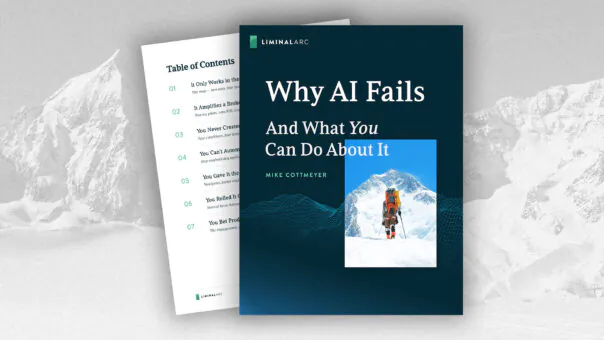
So what I started to think about was, well, what if we just said, okay, we do all these things and we’re going to get involved in all those things because organizations are complex and those pieces exist everywhere. And so within that frame, just lead with AI transformation. It’s kind of a quick tie back to agile transformation. Obviously AI’s got legs for a while. And so I started to think about, well, what if we just became an AI transformation company and just really led with that and then did everything else that we do downstream from that? And so really the thing, probably our number one performing piece of content is something I did, I think we posted on YouTube like nine years ago or something like that. It’s called Why Agile Fails and What Can Do About It, right? And the funny thing about that story is I didn’t even come up with that name.
There was a conference organizer, I can’t think of his name right now, who suggested the name. And so anyway, why Agile fails in what you can do about it? And I said, well, it’s kind of a theme of everything that we do in Lemonal Arc is why something fails in what you can do about it. Because you just see people, everybody adopts kind of the surface level of a lot of the stuff that gets popular. And we saw Agile theater and I think to some degree we’re going to get some AI theater. I think we’re getting some AI theater right now. And so I started exploring this thesis of why AI fails. And so I published some stuff on my Personal X account, my personal LinkedIn account. It’s getting ready to go live on the LemonalArc account over the next week or two. And so I started developing this thesis and then it was just like the floodgates came out and it’s just like I just found I had stuff to say again.
And so that’s when we started talking about doing this podcast. It’s when I started publishing again and I’ve probably got hundred pages of rough cut stuff that I’ve built with AI, just ideas that I’ve been developing with my second.
Stacy Gordon:
You can’t keep mine quiet for long is what I would say.
Mike Cottmeyer:
Yeah. I mean, it’s one of those things, right? And it’s kind of funny. It’s like when I kind of got myself into the head space of writing and content, I actually asked my admin, I was like, “Just clear Tuesdays and Thursdays for me.” I’m not totally successful at it. It’s hard packing in a full week into Monday, Wednesday and Friday. But I’m trying to hold time, producing a lot of content. So I’ve got the one series teed up. There’s a series I’m working on, which I think is an interesting thesis that AI is really going to become the next shadow IT. I think that’s an interesting idea. This idea of context engineering is super interesting to me and just kind of where the industry’s going around it. And so I just see the same failure modes starting to happen again and I think it’s something we can get ahead of. It’s kind of cool. Excited.
Stacy Gordon:
Well, I do love how you guys anchor things in patterns. And so if we go back to talking about AI, knowing that it’s the hot topic across every boardroom, what are you betting on as it relates to AI?
Mike Cottmeyer:
Well, kind of the seminal event that really started locking this in for me is as we were doing more AI stuff, the consulting side of my organization would have a certain take on it. The engineering side of the organization would have a certain take on it. I had a take, other leaders on my team had a take. And so we got together and we did a little bit of an AI, I don’t know, what do they call it? A workshop, like an offsite or something like that. So you did this AI offsite, round table maybe is what I was looking for. And so we started a conversation over a couple days and the first morning of it is just all over the place. And so my brain goes, okay, this is all over the place. I have to bring order to it. I’m a facilitator, not by certification or anything, but it’s just what I do, right? Facilitator. So I start trying to figure out, okay, what is everybody saying? What buckets do they fit in? And we kind of came up with these three buckets and they’re not really market ready, but it’s easy for us to talk about internally. And the three buckets are extract, enhance, and exploit.
And so the enhanced side of it for me, the things that we put in that bucket are the things that we’re using AI for to optimize existing business processes. And it could be agentic coding or it could be we’re doing a bunch of agentic work in our marketing department right now. We have skills built and workflows built and a pretty small team, like five people. But I mean, the stuff that our marketing team’s doing is just phenomenal. And they were actually the leaders of AI within the Liminal Arc back office, right? Yeah. And we’re trying to figure out all kinds of things that we can identify, but that’s not really a scale pattern. We’re a pretty small company, about a hundred people, and so it’s easy to get your hands on everything.
And our systems were built on first principles and we have a lot of data encapsulation and single point ownership and stuff like that, not a lot of dependencies between things. And so there are places where you can run the exploit use case, not, excuse me, the enhanced use case right out of the box. The next one is the exploit use case. And this is where people are trying to do similar kinds of things. They’re trying to solve business problems. They’re trying to identify workflows in more complex systems where the application architecture isn’t aligned, the data’s not clean, the encapsulation patterns are not established. And this is where I think we’re starting to see the pattern of stuff Gartner writes about, about the percentage of AI pilots that are going to fail, pilots that are not getting the ROI, token spend out of control, and again, not getting the value out of it that these organizations expect.
And I think that’s an artifact of trying to exploit AI capabilities on top of a organization, application, and data infrastructure that just isn’t ready for it. And I think that’s a dangerous pattern and it feels very much like trying to put Agile on top of a legacy organization that isn’t ready for it. And so again, at best, we end up with shadow IT where you have work groups that are just out doing stuff.
And then at scale, you have just larger scale pilots that just don’t work. And so that leads me to my third use case, which is the extract use case. And so the question you asked me was, where’s the bet? And so we’ve made some pretty significant investments over the last. This conversation actually started about two and a half years ago. We were talking about the idea of test-driven organizations and composable enterprises. And I was talking with my CTO and just going, okay, how could we build software to take a legacy code base, figure out how to pull it apart, do all the modernization and refactoring without having to have deep, deep, deep experts, because there’s not that many of them that want to pull apart Cobalt systems or want to pull apart AS/ 400 systems or want to pull apart really any kind of legacy application.
And so we started developing this thesis about two and a half years ago, started investing in it about a year and a half ago. Well, about nine months ago, six months ago, the models started getting good enough to do some of this stuff. And there’s a lot of folks out there that are doing application modernization with AI. We didn’t invent that little pocket. But what I think is unique about us is that, and this is an insight that I had, is probably one of the first things I explored with ChatGPT when I got my ChatGPT-4 account Back in the day. I asked myself the question is, the thesis was, is domain-driven design and business capability modeling the same fundamental discipline in two different languages? Business capability modeling being kind of a framework for figuring out how to extract and encapsulate the business where domain-driven design is really about how to extract and encapsulate the technology and alignment with the business. And what was funny is that as I’m querying AI, it’s like fighting my thesis the entire time, but in fighting my thesis, I kind of went, “I’m right.” And then I spent the next six months enlisting the rest of the organization to see it the way that I see it.
We’ve got a couple of things that we got in place, but just to sit in the question that you asked is what am I betting on? I’m betting on that thesis. I’m betting on the idea that that thesis combined with AI extraction tools and the idea of context engines, we can start to go through and enhance. I’m getting tangled up in my own words, an extract, enhance, exploit cycle where you extract the business capability, you align it to the domain, you enhance it so that you can do really clean agentic development, you can run really clean AI use cases within that encapsulated component, and that you can start to expose that data in a way that’s available to other parts of the organization.
And then the enhance side of it, again, I’m getting tangled up my own words. I have to come up with better branding, right? So the exploit side of it is that once I have the encapsulated components, then what I can do is I can start to have agentic workflows going across them. Then the next step of that, and this is the stuff that’s super hard to talk about with everybody because it’s like that’s not where everybody’s head space is. Sure. Then that starts to imply agentic extraction and modernization.
It starts to imply agentic change management. It starts to imply agentic SDLC. It starts to imply agentic systems of delivery. And then what’s going to be required for all of that is we get in this idea of where do humans fit into that and the humans in the loop and where do they fit and where can they be taken out? And to even begin to have that conversation, I think this conversation that is happening in some places in the market, but I don’t think it’s super well understood is context engineering. I think that’s a really, really big deal. Yeah, we’re piecing all that stuff together and that’s what I’m betting on.
Stacy Gordon:
Well, I know you said that this is your thesis, but have you actually seen it start to work in any engagements that you guys are doing today?
Mike Cottmeyer: Yeah. Well, so it’s funny. What that brings me to is I pay a lot of attention to X and Substack and different things, and so I’m trying to figure out where people are talking about what they’re doing. And I read this article, there’s a couple articles I’ve read that have really kind of lit up my brain. And this one article was talking about the idea of going to CIOs or CEOs and saying, “Where in your organization do you have a hundred people doing something where two people could do it?” And going down that path, that’s kind of lit my brain up a little bit. And then this one person talked about this idea of, “We’ve done this a hundred times.” I just went, “I don’t think anybody’s done this a hundred times.” I mean, the technologies to really do it, and again, I’m sure they have a context and I’m sure they’ve done whatever they’ve done a hundred times. They have a context, but in our context, nobody’s done this a hundred times. Technologies didn’t exist six months ago to do some of the stuff that we’re doing.
The case that I have to make is that Liminal Arc has 16 years of doing this by hand. LiminalArc has just within our company, not to mention the people we’ve hired in to help us with this, we’ve been doing extraction and modernization work for six years by hand. We know the first principles of doing all this stuff and we know where humans and judgment need to be in place. And now with the advent of AI, what started to happen specifically over the last year and a half is we’ve been slowly building the pieces into the client engagements that we’ve done. So we have clients that we’ve done ingestion and extraction work on their code bases using something we just call internally Code Navigator. And as we’ve extracted and rebuilt, modernized different applications that we’ve done by hand, we’ve slowly started to bring in agentic practices into that to speed up that work. We’re doing a lot of stuff with agentic playbooks on our side internally. We’ve started working with some of our customers with regard to agentic governance.
And so all these little pieces that are emerging in the marketplace are all starting to snap to grid. And what’s kind of interesting is that because we’ve got this integrated methodology, we’ll use AI and we’ll use these techniques for the places where they’re mature and we can do them. And then we still have the background and expertise to do it by hand in other places. And we know the pitfalls in all the different areas just because we have so many reps doing it over the last 15, 16 years. And so where have we seen it actually work? We’ve seen it actually work by hand all over the place. We have some really, really solid use cases going right now where we’ve saved and made clients lots of money implementing these things and they’re just becoming more and more identified over time, which kind of ties me back into the bet that you asked earlier. I don’t think this is going away. I think the AI failure modes are going to become more endemic.
The AI is shadow IT is going to become more endemic and it’s going to get worse before it gets better because the technology is advancing faster than I think most humans and most organizations can absorb. And so that kind of gets me to another piece of this thesis I have that, and again, you just have to untangle some of this stuff because people see what they can do in work groups. I haven’t written code seriously in 30 years. And I was on a ski trip with my family in February and in like five hours built an iPhone app. Didn’t even know the mental models for what’s it? I mean, I used to write C code back in college. Wrote some stuff in Lotus Notes back in the day, VB a little bit back in the day. Never did anything in Xcode, never did anything with Swift. In four hours I have an iPhone app on my phone. Last weekend I was like, “Oh, I think it’d be kind of cool to have an app that did this. Let me see if I can write it.” So there’s all these powerful use cases that we’re experiencing and I think that’s hugely successful. Individual productivity, 100%. And then on the other side where I think we’re going to see AI have a really big impact is I took the leap and bought a Tesla with self-driving this year. Mind blowing, mind blowing. It’s super cool. It’s the only car I want to drive. I got a couple cars and it’s like that’s the only car I want to. I say drive. I think I’ve driven it 5% of its total miles. And so I think we’re going to see huge leaps in devices that use AI.
I mean, it’s going to be all over the place. I’m excited to see what the near future holds in that.
But kind of my thesis is that where humans are actually required, we’re building products for humans or humans are required to be part of the process of building it, their taste and judgment and expertise and background, all stuff that can’t really be modeled into a context engine. I think it’s that middle ground that is going to be, for the next three to five years as organizations transition and try to figure out how to get their heads around this, you could make the argument that some companies are just going to go out of business and they’re going to be taken over by smaller companies that. I mean that’s the whole thesis behind SaaS right now. Sure. I don’t know. I don’t know. I don’t think I’m totally sold. I know a lot of our clients are running mission critical software on stuff that they can’t really do agent decoding on safely right now.
They can’t really run great AI type use cases on right now. And so for that big group of people in the middle that are going to struggle with this and they’re going to be in business and they’re going to thrive and they’re going to have clients and they’re going to have people, but they’re still going to want to use AI and they’re going to want to use it well and they’re going to want to use it in a structured, controlled, governed way. I think there’s going to be a space for that for a while. Does that change in a year, three, five? I don’t know, right? Back to the bet thing. I mean, I think everything’s moving so fast right now that I don’t think anybody knows exactly where this is going to go or where it’s going to land. And so if you want to use AI and you want to optimize your AI use and you want to get the most out of it, I think we’ve got a story and I think we can help kind of a thing. So it’s kind of a messy answer to have you seen it work? Yes, we’ve seen it work. Have I totally seen it work end to end? Nope. But I think we’re close. I think we’re close and I think we’re close enough to really start talking about it and share what we’re learning. I think there’s going to be some people that are going to go along for the ride with us.
Stacy Gordon:
Well, I love it. I mean, I think when you think about your history and understanding the change management piece and then the engineering, you’ve done both sides of the coin. And so I think that really allows you to see opportunities earlier because you’ve seen the pattern, right? Yeah, for sure. So I’m really excited that you were able to share all this with me today. One of the questions I like to ask a lot of the guests that I have is that if you were going to talk to a CTO tomorrow or a CEO that goes into the office tomorrow, what is something that you would encourage them to think about differently based on some of the things we’ve talked about today?
Mike Cottmeyer:
The thing I think, and again, I think it’s the thing that nobody’s really talking about, is my imagination has been captured by this idea of context engineering. And it’s fascinating because if you’re paying attention online, the conversations move so fast. So we’re talking about one day we’re talking about prompt engineering and the next day we’re talking about context engineering and the next day we’re talking about loop engineering and then somebody starts talking about memory engineering. And then the thing that seems to be bouncing around right now is graph engineering. And it’s all stuff. I don’t think the industry’s really caught up with prompt engineering and then everybody’s saying it’s going away. Well, there’s a lot of prompting going on out there. You know what I mean? So the engineering moves, the thing people are talking about moves and everybody’s still trying to catch up with the first thing. But I think prompt engineering’s kind of solved. We have a company that we acquired earlier this year called Atomic that does some prompt engineering stuff. It’s actually really cool. Not really the topic to go into today, but it’s really cool.
The next feature set for that based upon a lot of the work that we’re doing is really around this idea of context. And I think I talked a little bit about that earlier, but this idea of how do you ingest all the streams of information that an agent would need to know to make a good context aware decision? And so that’s when about six, nine months ago when I started playing with this really heavy, I’m like, I don’t see how people use AI without a context apparatus around it in a meaningful way. I mean, sure, you can upload a document, you can work on a paper, whatever, but if you want to have long running, I don’t even say conversations because that’s still kind of achievable too. But as the world changes around you and the AI needs to make decisions along with you, how are you building that context engine around you? So I got really passionate about that. There’s a small group of us within LA that we’re really passionate about it and we’re starting to roll it out and create context engines for our company. And we have clients that we’re building context engineering with not only to support our teams, but to support what they’re doing there. And again, the simple thing that you can do is just get your Claude account and point at it in Obsidian database and just tell it to start remembering stuff and just start putting stuff in it. That’s the best thing that you can do. And then it’ll start remembering all the stuff around you.
And then if you want to get really interesting with it, you can connect your email to it, you can connect your calendar to it, you can connect your to-do list to it. I have it ingesting recordings of all the meetings I go to, which is absolutely game changing when it starts to understand the conversations that you’re having outside of when you’re talking to it. And then I journal every day and so I load my journals into it and I save X articles and. God, I just lost it for a minute. X articles and Larry, it doesn’t matter, right? Just other websites and things like that. You just ingest everything that you’re thinking about into it. And what’s fascinating is over time, and this is kind of the behavior you want, it starts making connections between things. And then you can ask it long running questions like, how has my thinking on this evolved over the last year? Since I have so much journal information I plugged into it, how has my thinking on this topic evolved over the last eight years? That’s fascinating. How have my tools and techniques and the things I talk about evolved? What have the seasons of my life been over the last eight years? It’s crazy to be able to look back on that. And that’s why I think that’s going to be so much the key to the things that we do where humans are required. Again, I think humans are kind of like natural context engines. We just somehow store all this stuff in our brains. And if we want AI to be able to approach that level of decision making, it has to be exposed to the factors that are going on in your business and the conversations that are happening in your business.
And yeah, humans can be in the loop and they can monitor it and they can decide what’s canonical versus what’s transient and all these different things. But your question was, what should executives be paying attention to? I think I just tell everybody, just get a cloud account and connect it to an obsidian database and just start playing with the power of it. And once you see that, it’s something you can’t unsee. And then maybe the other thing is there’s a lot of noise in the industry right now, and I think it’s just going to get noisier. And so I think at some level you’ve got to figure out what you’re going to ground into, what’s going to be kind of your floor. And that’s where I’ll go back to some of the first principles. This is just kind of a funny aside, but as we started moving in and started doing more cloud work and I started getting up underneath the hoods of it, I used to do virtual server stuff back 25, 30 years ago when I was doing, and I’m just like, “Oh, that’s the same as that. Oh, that’s the same as that. Oh, that’s the same as that.”
And now granted, the technologies are more advanced and it’s more at scale and it’s more widespread and it’s more robust and everything. It’s the same fundamental concepts. And so yeah, these principles and patterns are the things that are fundamentally timeless in this. So whether it be the patterns of change management or the patterns of encapsulation or organization or the patterns of how to get humans to move or how to optimize an organization or how to structure an organization or how to structure a technology stack, it’s all the same stuff. How to structure data, it’s all the same stuff. So now what we’re trying to figure out is where AI can help us in that work, at least again, for the companies that are in the middle trying to figure out how to apply AI into the things that they’re doing now. And so yeah, that’s my take on a lot of this stuff.
Stacy Gordon:
Well, I think it’s easy to feel or for people to feel out of control, but I love what you’re saying is anchor to the fundamentals and the patterns because that gives you control back and you can then make calls with confidence. And I think the other thing that really resonated with me of what you said was knowledge is power and you’re out there doing the things so that you can lead and have conversations with people about what you’re actually learning and experiencing and there’s nothing better than that, Mike.
Mike Cottmeyer:
Yeah. It blows me away that I’ve been running this company for 16 years and I’m just messing around in my office and I’m out talking about stuff that seems all over the place in my world, but I don’t think the stuff is all over the place in everybody’s world. I mean, vast majority of humans are still using ChatGPT as chatbots and an advanced Google search. And there’s a couple more steps that are really ready to take advantage of right now that I think are accessible to most folks. And so yeah, just get in and start playing with it and see what’s possible. And AI will tell you how to do it. Well, that’s pretty cool. Hey, I read this article. How do I do this? It’ll say, do this, do this, do this. The barrier to entry has gotten pretty low on being able to optimize yourself at this point. And then what you start to realize, you optimize yourself, you can optimize your work group, you start to optimize your company, you start seeing the patterns, and then you’ll just realize they’re all the same.
Stacy Gordon:
Well, Mike, this has been great. I cannot thank you enough seriously for joining me today. And let’s be clear, I hope it’s not another year before you decide to sit down and shsre your thoughts again.
Mike Cottmeyer:
Yeah. Well, I’m going to be writing a ton. So what I’m going to ask you to do for me is just pay attention to stuff I’m writing and then let’s just, on some of the further ones, as we start to go down blog post series or whatever, let’s just pull them apart and let’s have a conversation about them.
Stacy Gordon:
Well, I would love to do that. So thank you again, everyone. This is future state now. We have a number of great conversations on tap, so I hope you’ll join us again soon. Thanks.