

 Management Consulting
 Software Engineering
 Product & Strategy
 AI
AI Security
 Cloud
Cloud Data
Data Talent


Unveiling the Agile Operating Model


New strategies or dramatic shifts in existing strategies require an examination of an organization’s operating model. Agile is a new business paradigm, but few established companies understand what needs to change to make their business Agile. Most think it is about speed and flexibility. They forget about efficiency and resiliency, key fundamentals without which companies fail to achieve their desired speed. Companies that master the balance between these characteristics are more successful at transforming into Agile organizations.
What does this balanced next-generation operating model look like? Let’s examine the three core elements of the operating model – organization (resources and structure), governance (decision-making model), and processes (steps to get things done).
Organization
Agile organizations separate the traditional structure from the way work is delivered. Traditional organizational charts include reporting relationships that encompass where the work gets done, who manages the work, and who is responsible for performance management. Historically, these were all aligned.
As we move into an Agile world, the organizational structure and delivery need to be separated. The organizational structure will still specify an employee’s “homeroom” and assigns him/her a manager who is still responsible for rewards, coaching, and performance conversations – this provides clarity and stability. However, the day-to-day work is done in dynamic Agile teams that are cross-functional, and have a set of responsibilities and deliverables for each member of the team. These teams exist for the duration of the product lifecycle or service delivery lifecycle and are then dissolved and reassembled in a different form based on the customer and market needs.
Governance
There are three levels of decision making in a typical Agile governance model:
- Strategic decisions focused on market positioning that determines which capabilities the organization wants to develop to successfully compete
- The Investment Tier decisions made by a cross-functional group of organizational leads based on economic trade-offs of pursuing certain capabilities/service offerings
- The execution level decisions delegated to individuals or working teams
What is efficient is the structure of the governance committees and the transparency into the individuals/groups who make the decisions. The need for nimbleness in the Agile governance model is focused in the Investment Tier. The ability to dynamically assemble the right cross-functional team to make the Investment Tier decisions requires commitment from the whole organization to making these decisions quickly with all the right leaders having a voice in the decision making. You can read more about the Agile decision-making model in my previous blog post – Achieving Decision-Making Excellence Through an Operating Model Transformation.
Processes
Process is an operating model element where standardization is key to efficiency and speed. For the core processes, e.g., Amazon’s supply chain, the sequence of steps, ownership, handoffs, and decision rights are clearly defined and understood, allowing the company to measure current throughput and estimate future expectations. Variability across business units in these core processes make the level of harmonization needed for Agile delivery impossible, making standardization essential. Flexibility comes in with process improvement, especially in areas where cross-functional input or handoffs occur.
Conclusion
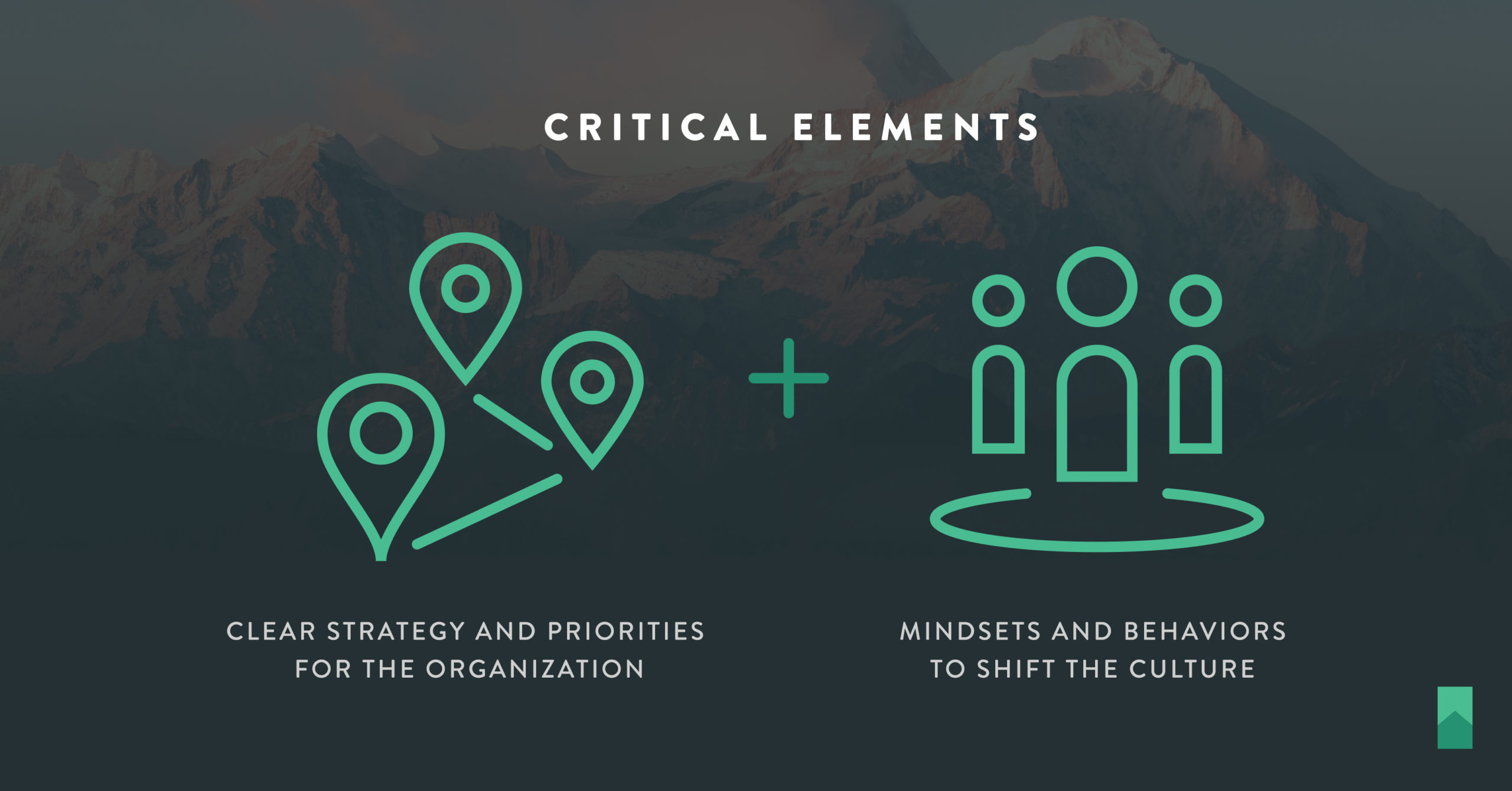
The move to an Agile model requires the stable underpinnings of primary organizational alignment, a transparent governance model, and standardized, measurable processes. This backbone allows for the flexibility needed to assemble dynamic teams, make quick, cross-functional decisions, and redesign processes for efficiency. The critical element to enable this Agile operating model is a clear strategy and priorities for the organization and the mindsets and behaviors to also shift the organizational culture.